The story in 100 words
An independent researcher asked six AI tools for the customer-service phone numbers of 19 UK brands, 250 times, in the week before Black Friday. None gave a scam number. But when brands such as Booking.com, Jet2, PayPal and DPD made their numbers hard to find, the AI tools took them from directories, complaint sites and Facebook instead. More than half the answers that gave a number relied at least partly on someone other than the brand. On the same Google pages sat fake Royal Mail and boohoo WhatsApp "support" groups with about 19,500 members, and fake Jet2 numbers hosted on Apple's education website.
The results are a snapshot of one week, and AI answers change between runs, sometimes within minutes. The fake groups, numbers and lookalike shops we found were all still live on publication day, in the same search results AI tools draw from. AI answers can also lag behind the web: Google kept showing pages that had already been taken down, and OpenAI has said its answers can take time to update after scam content is removed. No platform can guarantee these pages stay out of its answers.
Headlines and angles
Pick the one that fits your desk. Each line is backed by the figure underneath it, and all of them are in the full study.
- When brands hide their phone numbers, AI and shoppers look elsewhere. Sometimes elsewhere is a scamMain headlineFor brands that hide their number, 43% of AI answers had no brand source behind the number. For brands that show it, 18%.
- Can't find the number? Neither can AIConsumer desks, short subject lineAmazon: 0 of 10 number-giving answers sourced from Amazon. Wizz Air: 0 of 9.
- We asked 6 AI tools for UK brands' phone numbers 250 times. Half the answers came from someone other than the brandData and trade desks71 of 135 answers that gave a number (53%) took it at least partly from a third party.
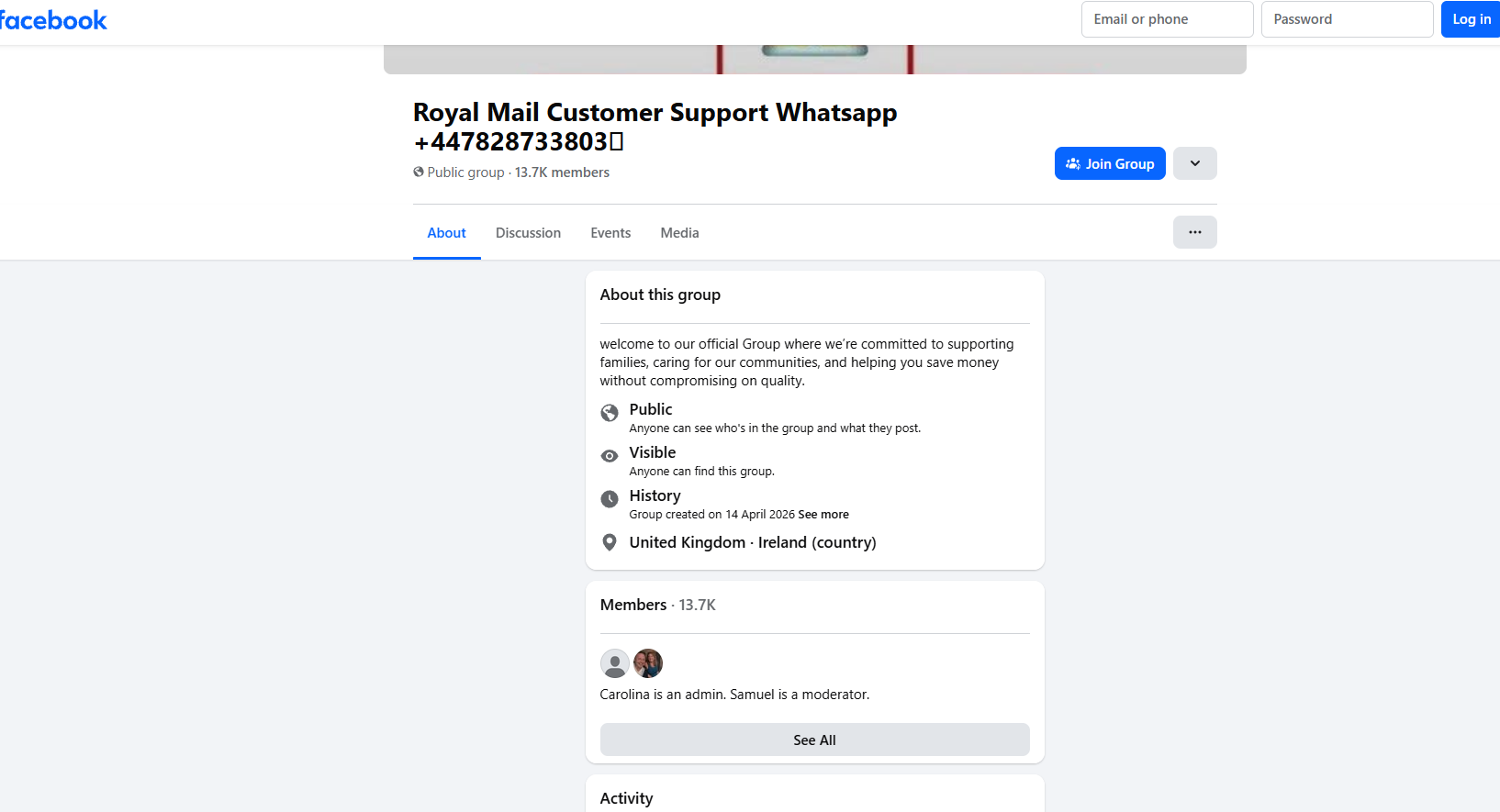
- The AI answer was right. The fake support group below it had 13,700 membersConsumer and regional desksEvery AI answer gave Royal Mail's real number. A public Facebook group named "Royal Mail Customer Support Whatsapp" with a mobile number in its name ranked on the same Google page.
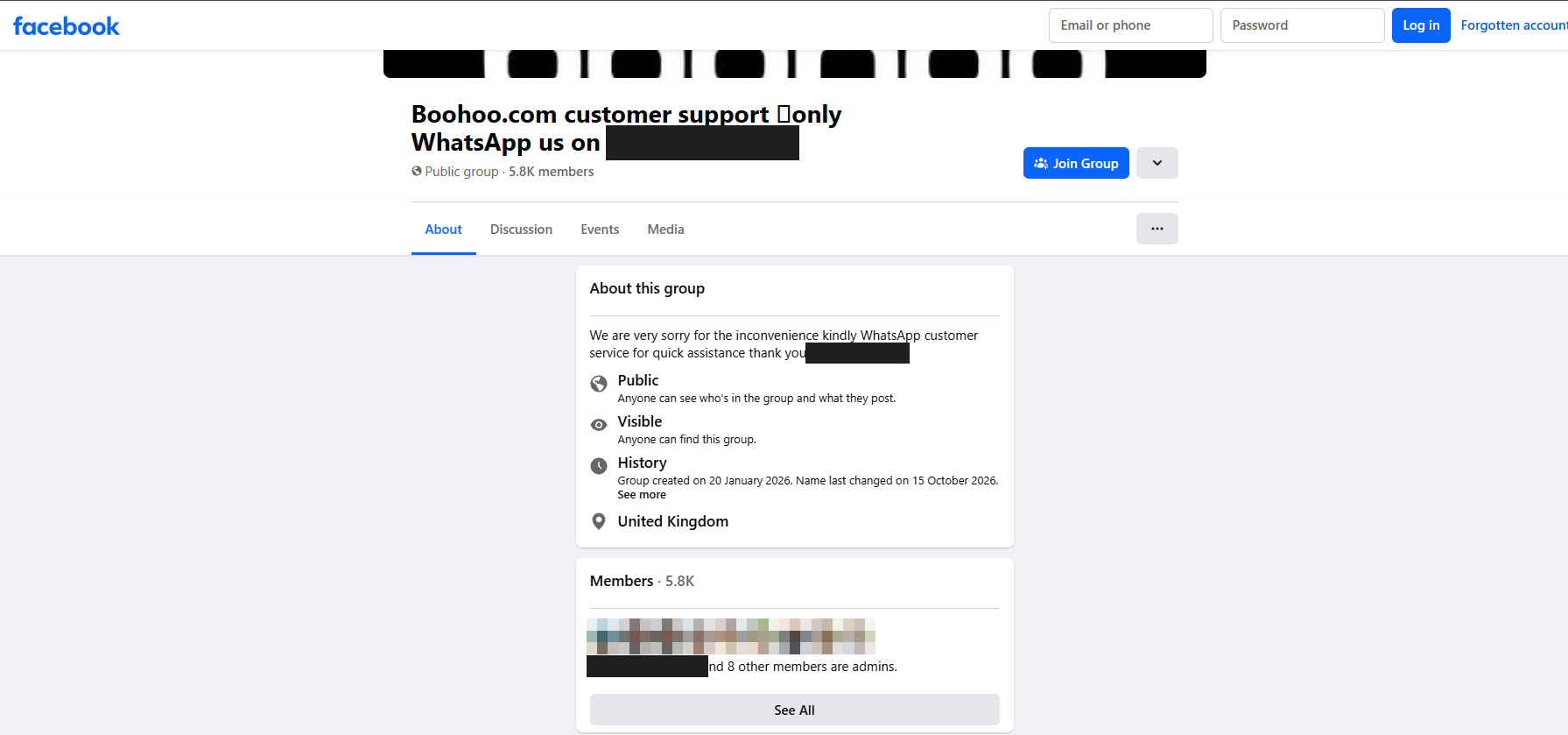
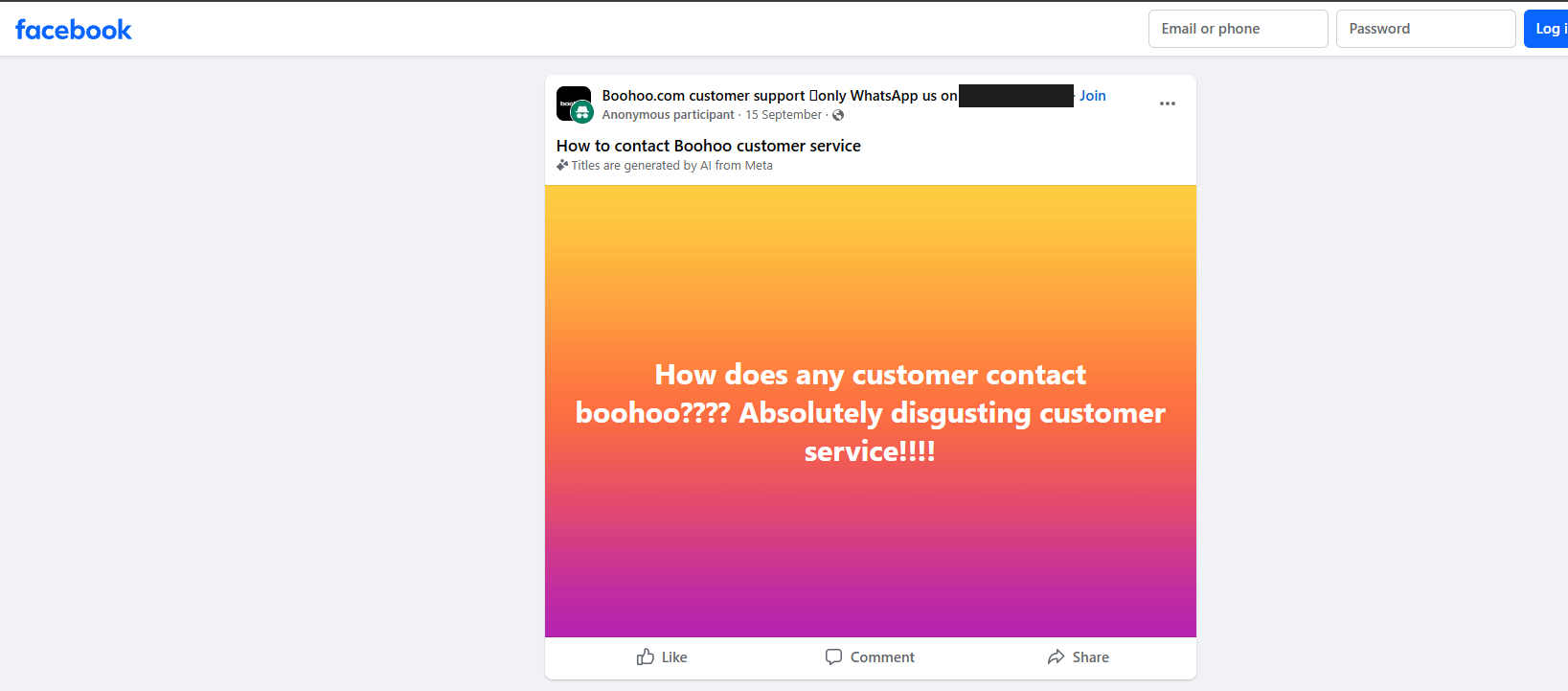
- Fake "Royal Mail" and "boohoo" WhatsApp support groups with 19,500 members rank on Google beside AI answersConsumer and money desks13,700 and 5,800 members. Post titles in both groups were written by Meta's AI.
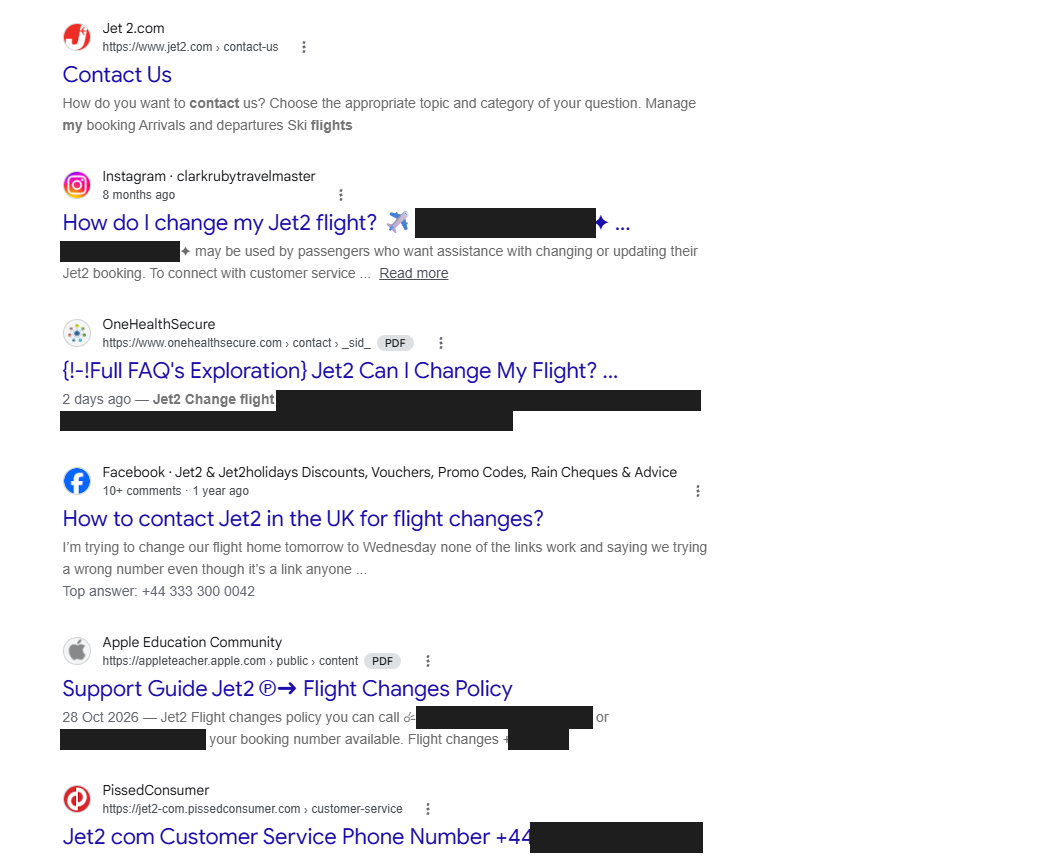
- Christmas shopping: AI tools mostly get brands' numbers right. Google's results page around them doesn'tTech desks0 scam numbers in 250 AI answers. 4 of the top 7 Google results for a Jet2 search pushed fake numbers.
- When AI warns you about scam numbers, it sometimes links to the scamTech desks (Perplexity angle)Perplexity cited spam PDFs on a French government agency's site and Fiji's Ministry of Finance site inside its own "avoid unofficial numbers" warnings.
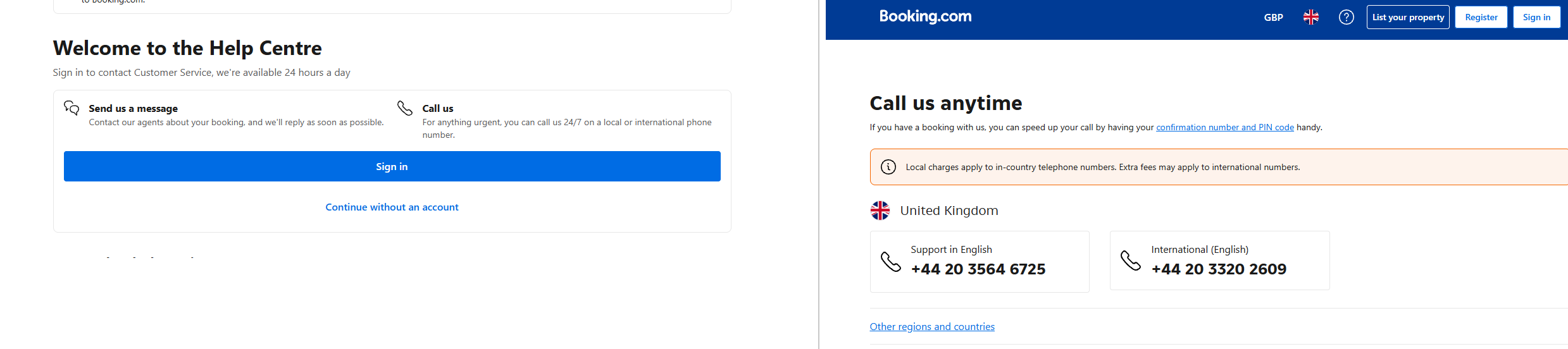
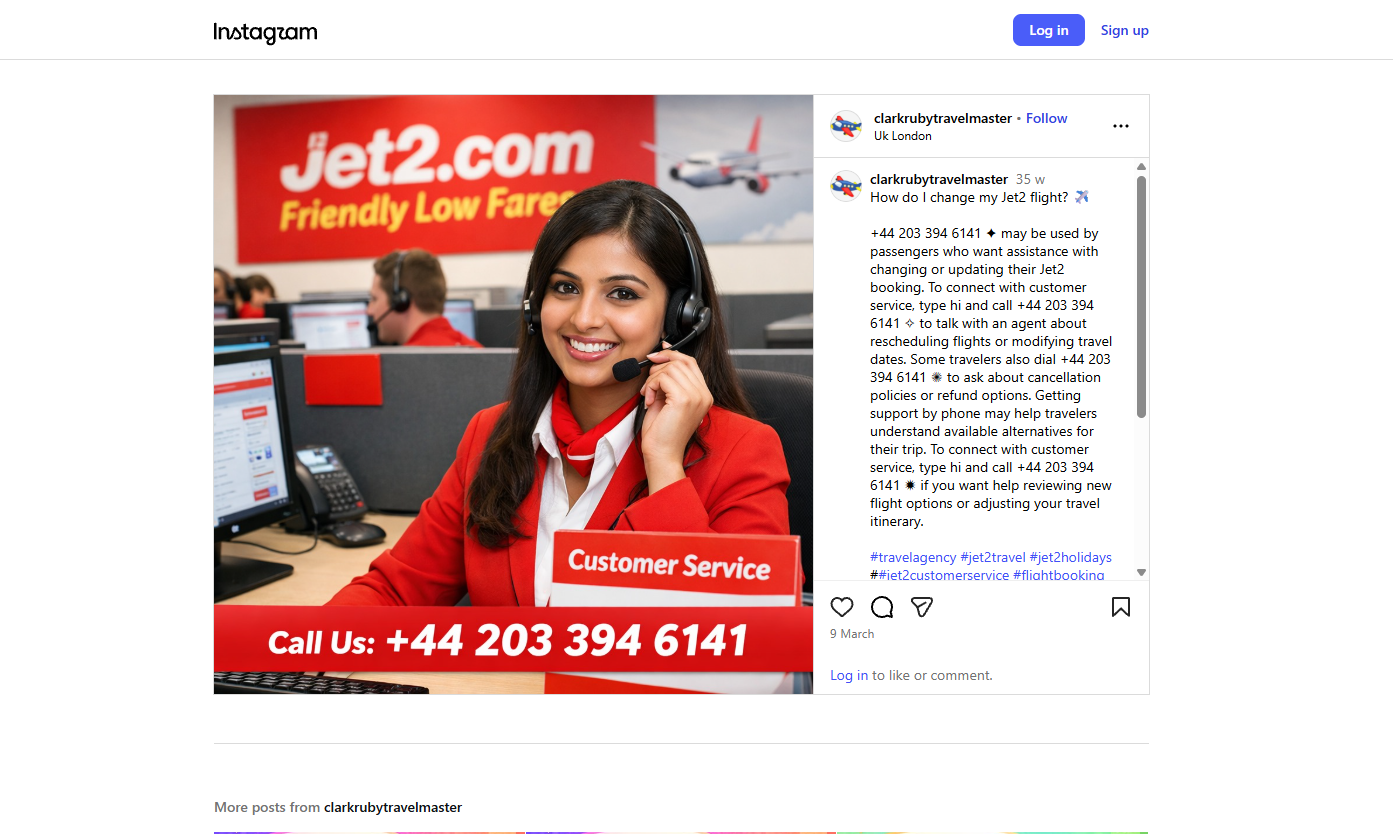
- Fake Jet2 "change your flight" numbers on Apple's education site rank above Jet2 on GoogleTravel desksA PDF on appleteacher.apple.com, an Instagram post with Jet2 branding, and two more fakes in the top seven. Jet2's real number appeared once, in a Facebook comment.
- Google's AI named our tester's village without being askedScottish regional, privacyGoogle AI Mode named the tester's village three times on searches with no location in them, while logged out in a private window.
Key figures
All figures come from one counted dataset of 250 answers. Percentages are rounded to the nearest whole number.
- 250 AI answers logged across Google AI Overviews, Google AI Mode, ChatGPT, Perplexity, Gemini and Meta AI, for 19 UK brands plus shopping and Christmas event searches.
- 0 fake or scam numbers given as a brand's customer-service line.
- 53% (71 of 135) of answers that gave a number for the 13 brands with a phone line took it at least partly from a third party. 36% (48 of 135) had no brand source behind it at all.
- 43% no brand source for brands that hide their number, against 18% for brands that show it clearly.
- 10 answers gave a wrong number (wrong department, wrong country or no longer in use), 5 of them for PayPal. 2 gave Ryanair's old premium-rate 0871 line.
- 2 of 32 "free 0800" searches showed a Google AI Overview, against 29 of 30 worried-customer searches.
- 0 lookalike shops named by AI in 23 shopping answers.
- 7 answers cited seeded spam pages or lookalike shops as sources.
By AI tool: where the numbers came from
| AI tool | Answers that gave a number | Number from the brand's site only | No brand source at all |
|---|---|---|---|
| Perplexity | 20 | 16 | 3 |
| Google AI Overviews | 22 | 9 | 6 |
| Meta AI | 13 | 7 | 5 |
| ChatGPT | 21 | 8 | 8 |
| Google AI Mode | 46 | 11 | 17 |
| Gemini | 13 | 3 | 9 |
The remaining answers cited the brand and a third party together. Snapshots from one week; AI answers change between runs.
The brands
| Group | Brands |
|---|---|
| Hide their number (behind sign-in, chat or deep help pages) | Booking.com, Ryanair, PayPal, Amazon, easyJet, Wizz Air, Airbnb, DPD, Jet2 |
| Show their number clearly | Klarna, Royal Mail, Evri, Yodel |
| No phone line for customers | Etsy, Vinted, Depop, boohoo, ASOS, eBay UK |
| Shopping and Christmas events | UGG, Pandora, The North Face, Le Creuset, Russell & Bromley, LaplandUK, Santa grottos |
Comment from the researcher
"I went in expecting to catch an AI tool handing out a scam number, and in 250 answers it never happened. The problem I found sits with the brands. When a company buries its phone number behind a login or a chat bot, the AI goes and finds it on a directory or a Facebook page, and so do worried customers. On the same Google page, fake support groups with thousands of members are waiting for them."
"If you're chasing a refund or a missing parcel this Christmas, click the source the AI gives you. If it isn't the brand's own website, check before you call."
David Wood, independent researcher, aivisibilitygap.com
Images
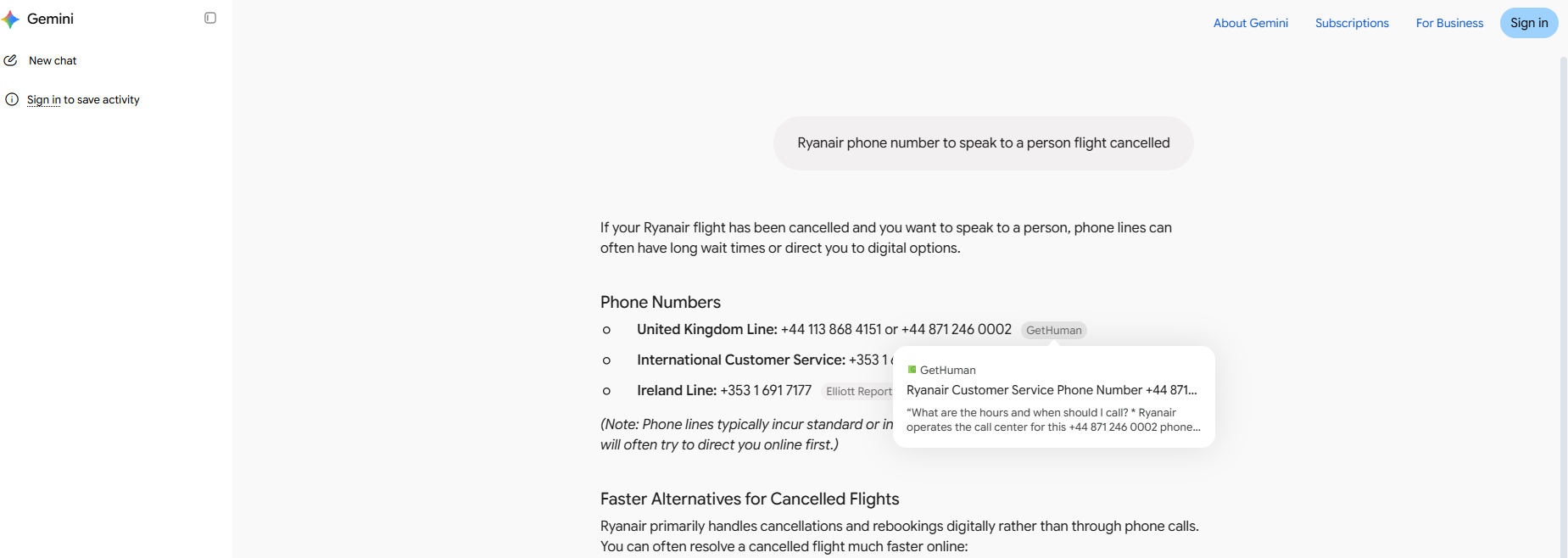
Screenshots taken during testing, 12 to 14 November 2026. Phone numbers, customers' names and tracking details have been removed or blurred. Free to use with the credit "aivisibilitygap.com". Full-size versions on request.
What this study does not show
Please report the findings at the strength they were found.
- No AI tool gave a scam number as a brand's line. The risk sat beside the AI answers, on the same results page.
- We didn't find a named UK shopper who lost money through these specific pages, and we don't claim one.
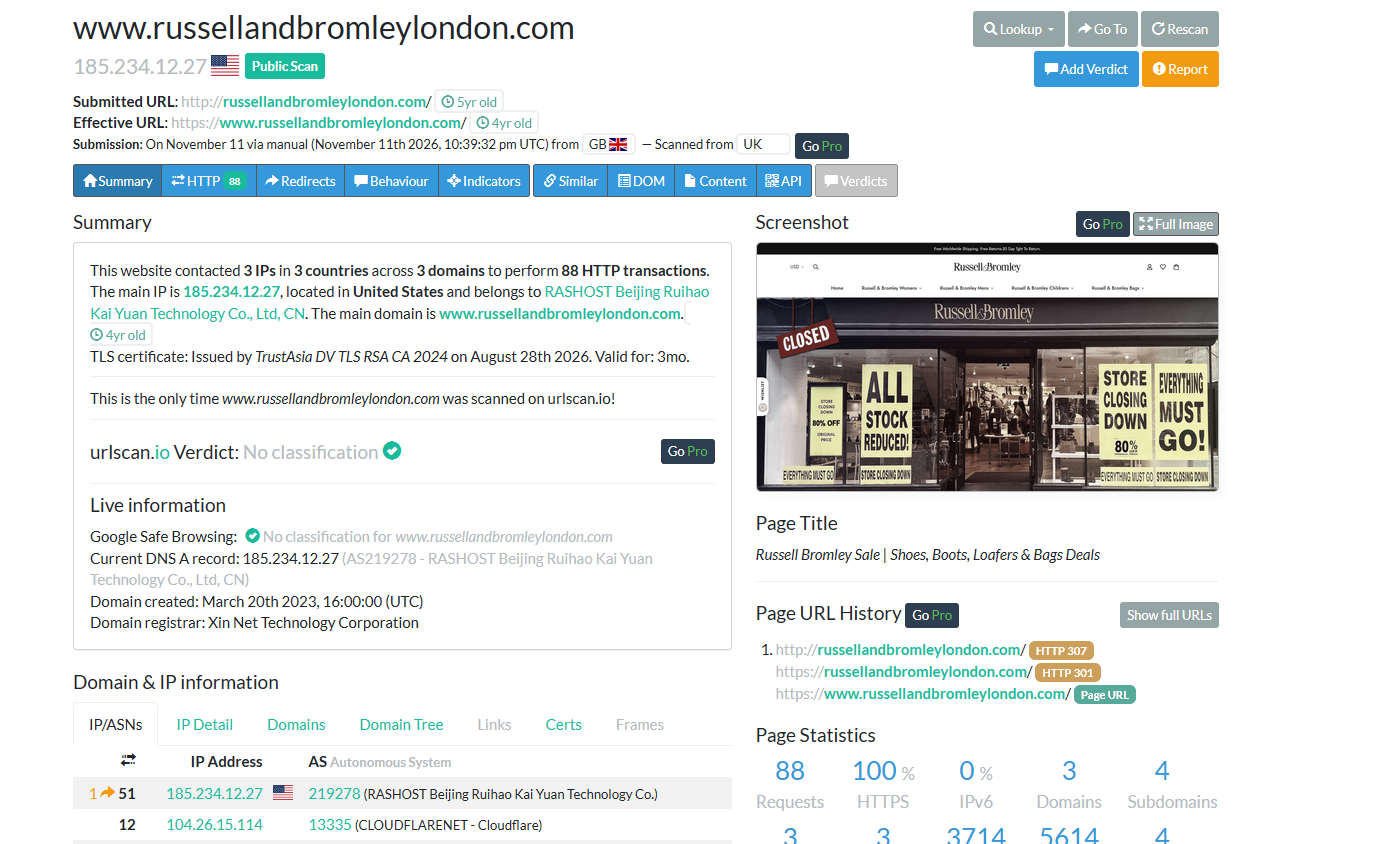
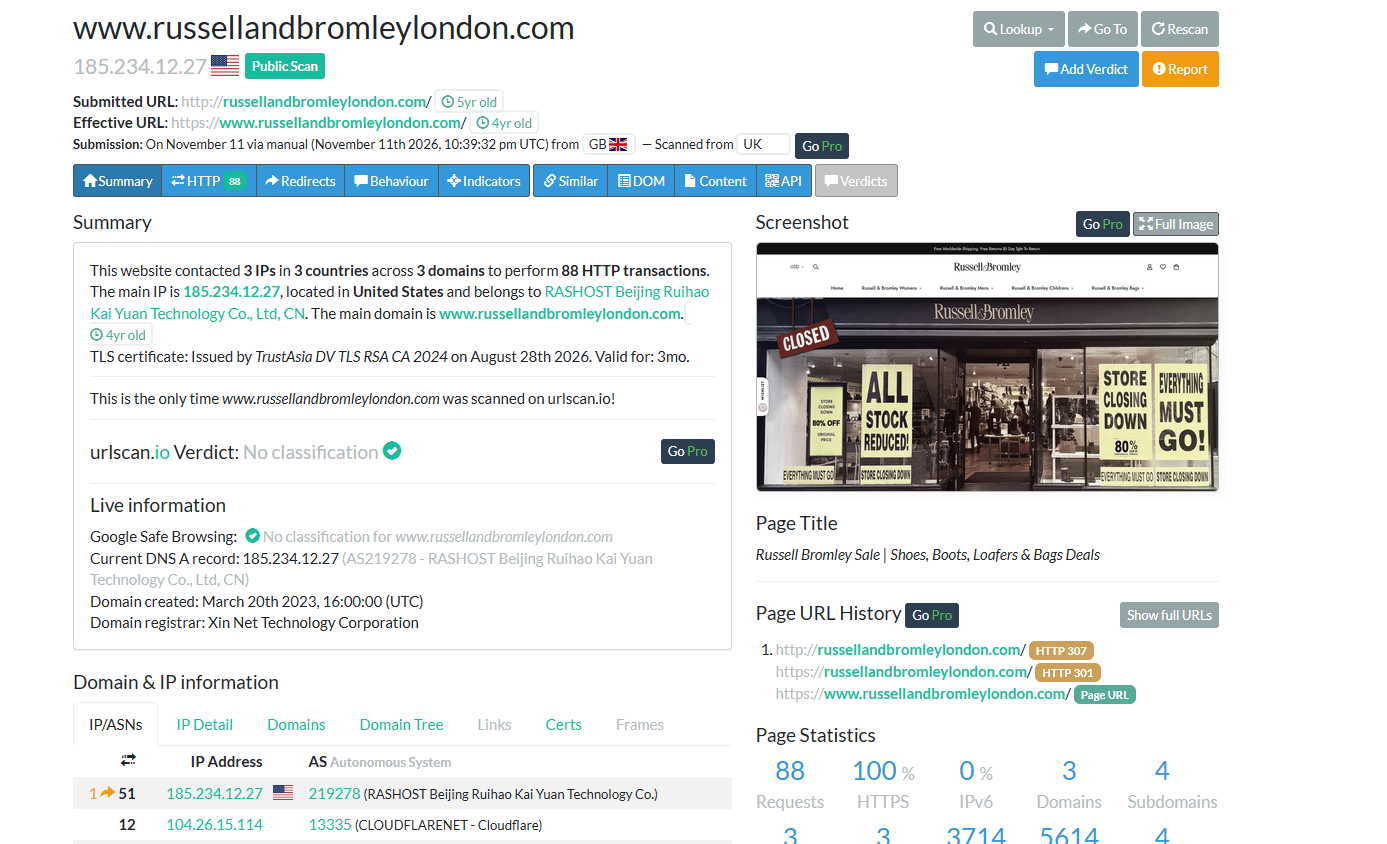
- We call creusetuk.com and russellandbromleylondon.com "lookalike shops". We haven't confirmed that either takes money without delivering.
- No suspect number was called. Suspect sites were checked through urlscan.io, not visited.
- One tester, one location in Scotland, one week. These are snapshots, not averages.
Brands asked for comment
How it was done
- When: 10 to 14 November 2026, after a pilot on 7 November.
- Tools: Google AI Overviews and AI Mode (logged out, private window), ChatGPT (Temporary Chat, memory off), Perplexity, Gemini and Meta AI (logged out).
- Questions: two per brand, one in a worried customer's words ("parcel not arrived, speak to a person") and one in the wording scam pages target ("free 0800, 24/7"). Plus four bargain-shopping searches and three Christmas event searches.
- Checking: every number was checked against the brand's own website on the day. We also recorded which source each AI tool cited for the number: the brand only, the brand plus a third party, or no brand source.
- Not counted: searches where Google showed no AI answer, five Perplexity searches blocked by its logged-out limit, and four extra answers run by mistake.
Full method and limits are on the study page. The query list and answer-level data are available to journalists on request.
Using this material
Figures, quotes and images on this page are free to use in news coverage. Please credit aivisibilitygap.com and link to aivisibilitygap.com/hidden-phone-numbers-ai-scams.html where your format allows.
Contact
David Wood, independent researcher, aivisibilitygap.com
Email: admin@aivisibilitygap.com
X: @TheDavidWood · LinkedIn
Available for interview, by phone or video, from Scotland.
About aivisibilitygap.com
aivisibilitygap.com is an independent research site run by David Wood, based in Scotland. It studies how AI tools answer everyday questions, where they get their answers from, and what that means for the people and businesses named in them. Previous studies include what AI tools tell UK university applicants.